
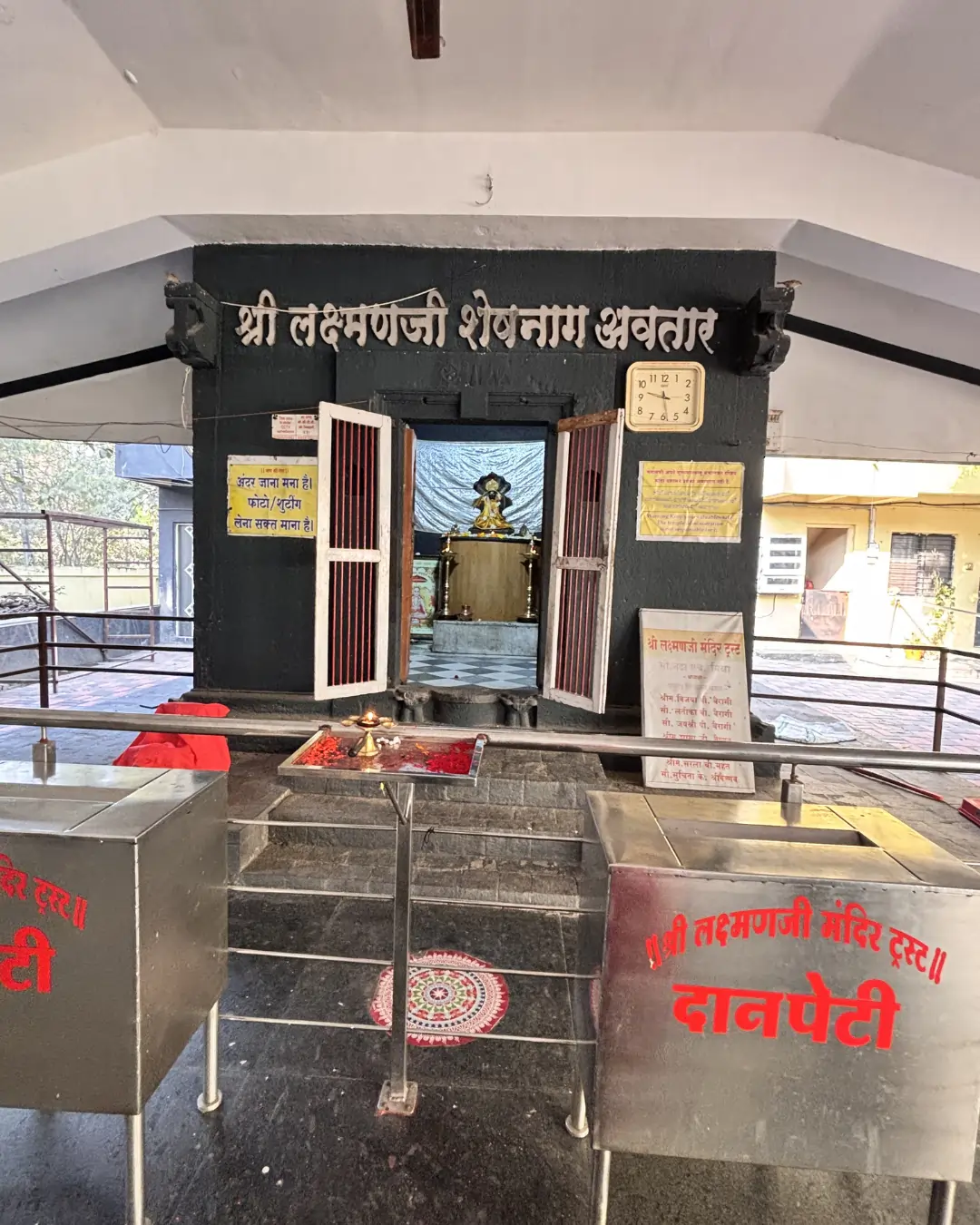
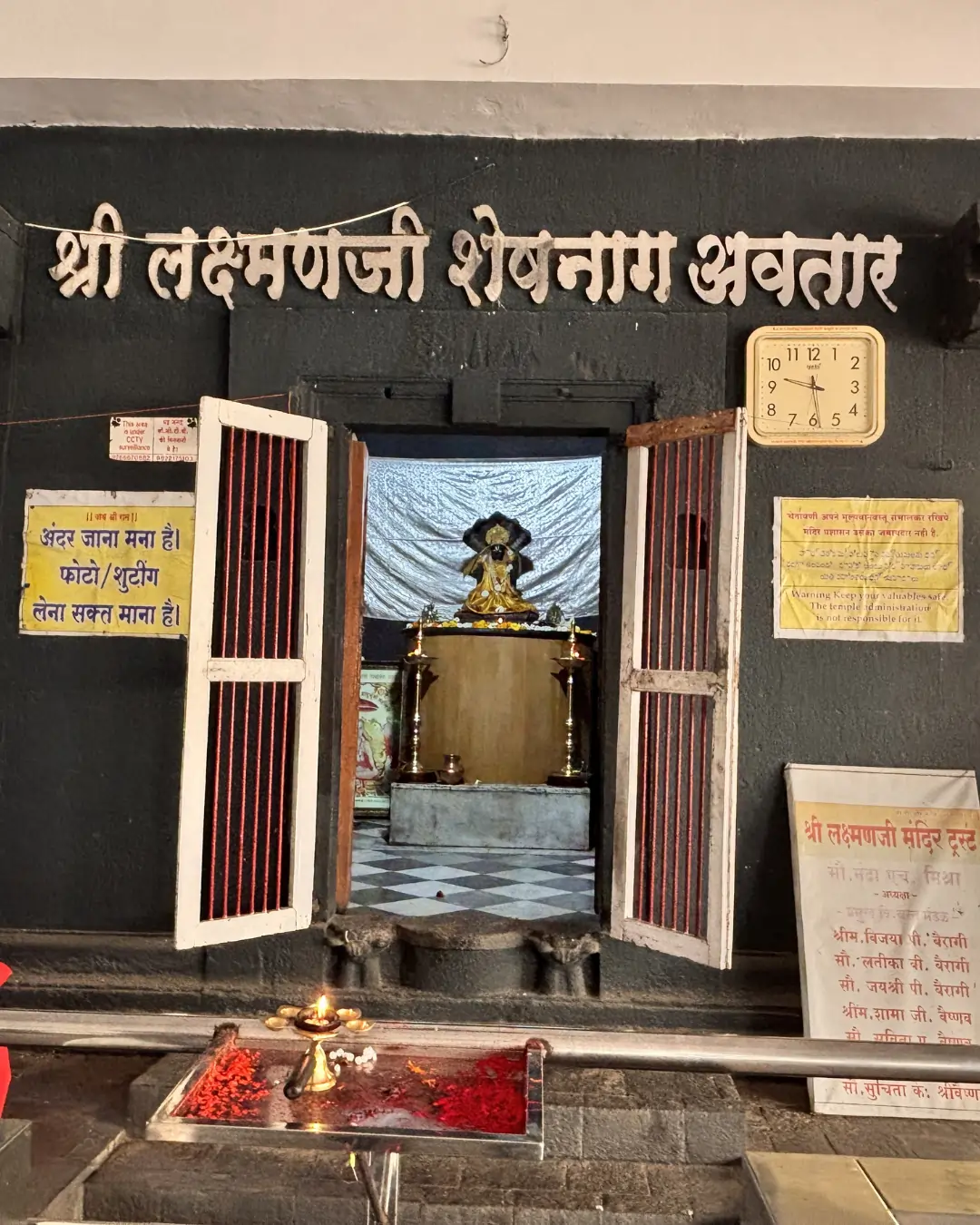
Shree Laxmanji Sheshavatar Mandir
World’s only Lakshmana temple
Temple Timings & Hours
6:00 AM – 12:00 PM
4:00 AM – 8:00 PM
Best Time To VIsit
7:00 AM – 9:00 AM
Location
Near The Godavari And Kapila River Sangam, Tapovan
Welcome to one of the most unique and peaceful shrines in Nashik. While India has thousands of grand temples dedicated to Lord Rama, temples dedicated exclusively to his younger brother, Lord Lakshmana, are incredibly rare.
Located in the quiet, green forests of Tapovan (near the Godavari and Kapila river sangam), the Shree Laxmanji Sheshavatar Mandir is not just a place of worship. It is the exact spot where a single action changed the course of the Ramayana, and gave the city of “Nashik” its name.
How to Reach Shree Laxmanji Sheshavatar Mandir
By Train
10 km from Nashik Road Station.
Bus
4–5 km from CBS (Central Bus Stand), Nashik
Walking
25 Minutes from Ramkund
Location
Located in Tapovan, Panchavati, Nashik,
- Located in Tapovan, Panchavati, Nashik
- Dedicated to Lord Lakshmana in Sheshavatar form
- One of the rarest Lakshmana temples in India
- Associated with the Surpanakha incident from the Ramayana
- Built in 1817 during the Peshwa era
- Surrounded by peaceful, forest-like environment
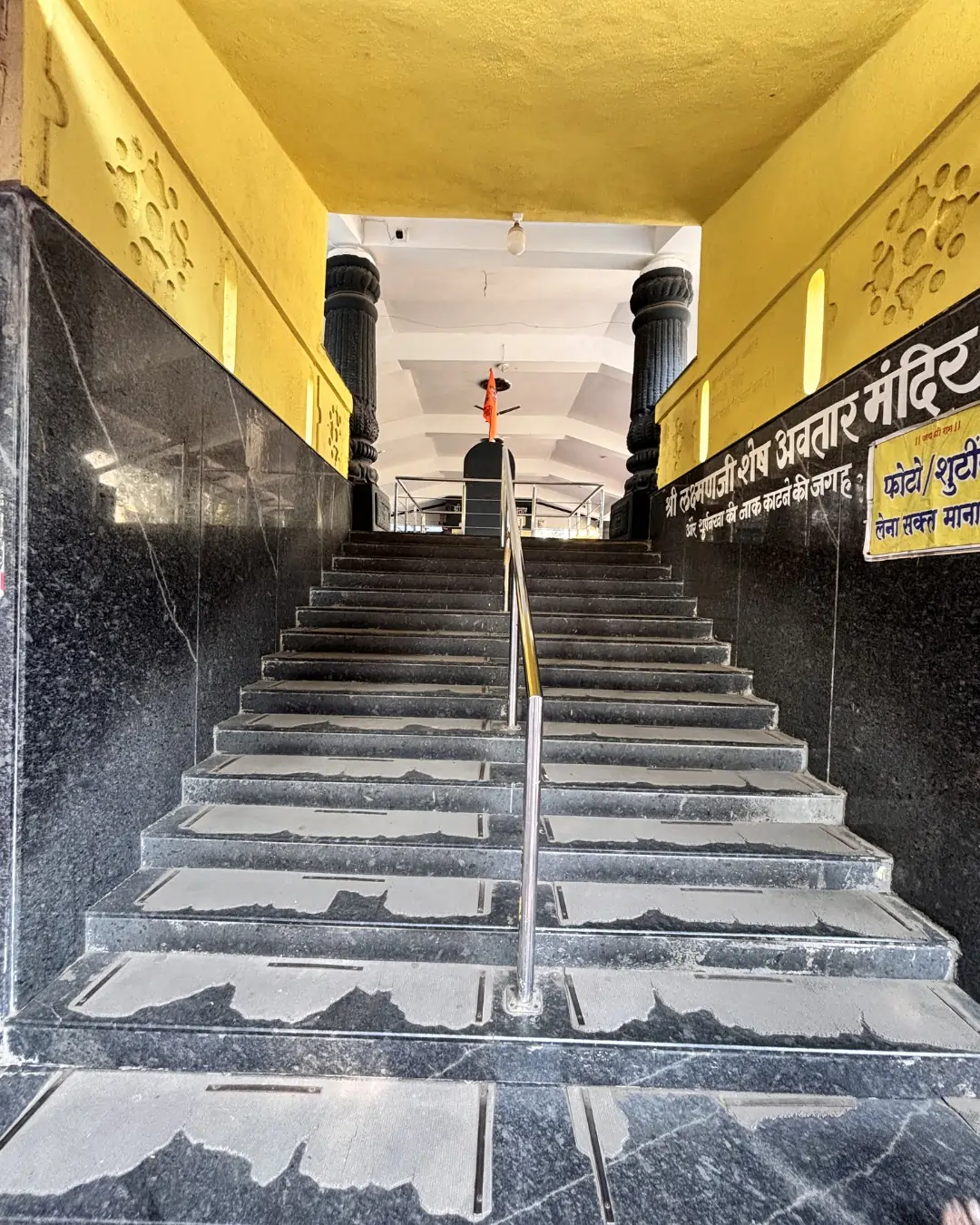
- Entry includes 14 steps to the main temple
- Features a unique Hanuman idol facing Lakshmana
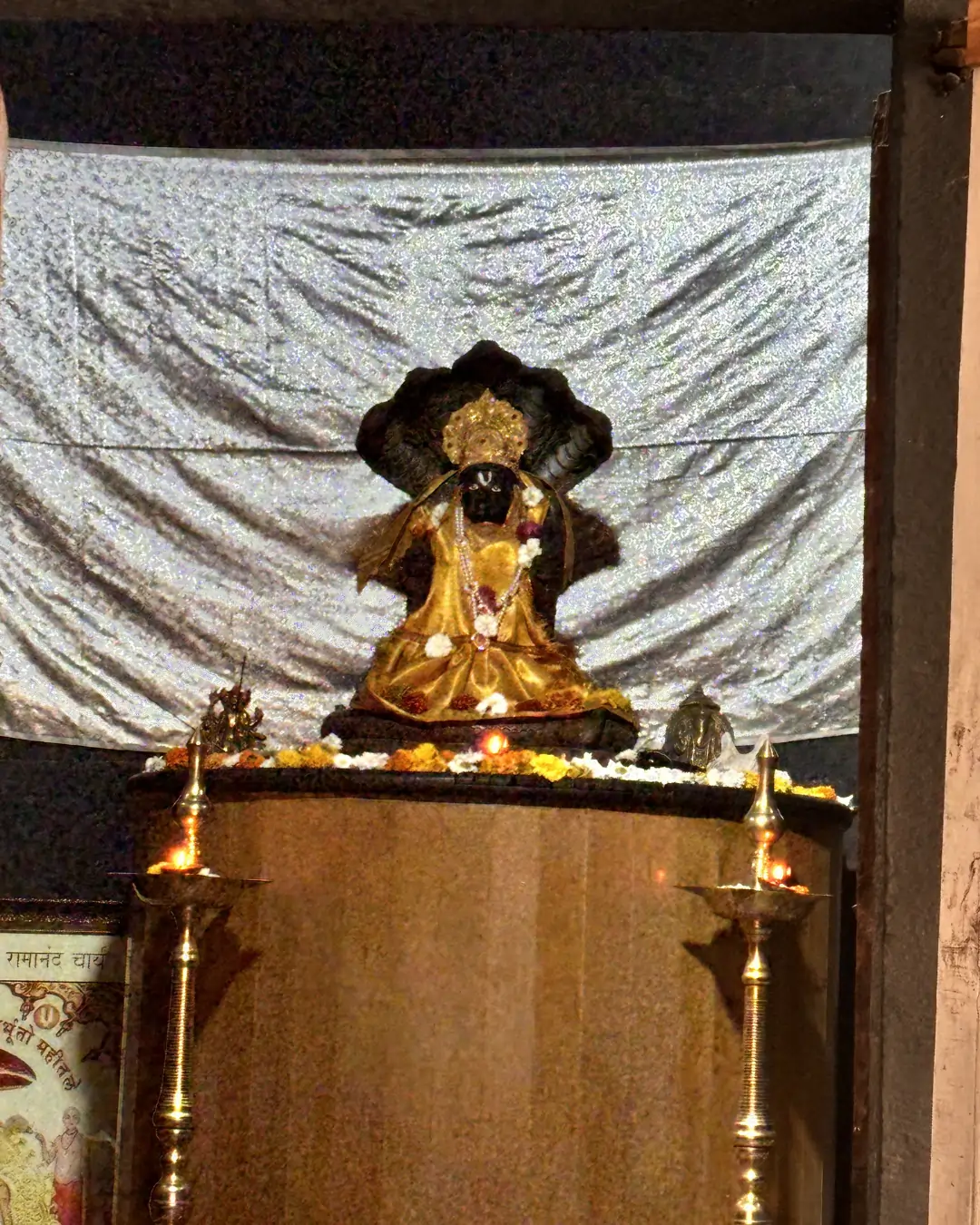
- Represents Lakshmana as the incarnation of Sheshnaag
- Open from 6:00 AM to 12:00 PM and 4:00 PM to 8:00 PM
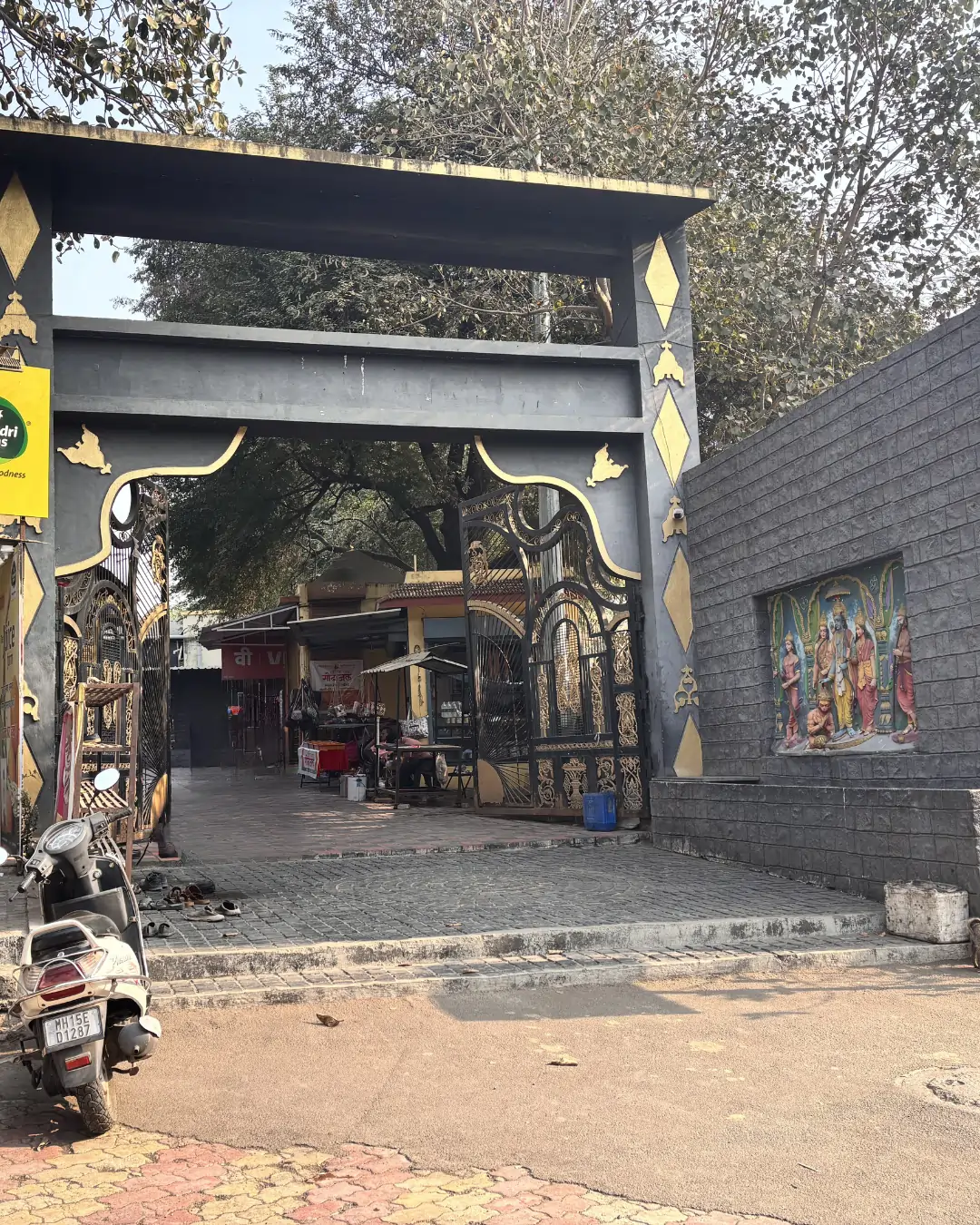
- 🅿️ Parking (Normal Days): This temple is in a very peaceful, uncrowded area. On normal days, there is a free parking space directly in front of the temple gate. It is very easy to access.
- 🅿️ Parking (Kumbh Mela/Peak Days): During the Simhastha Kumbh Mela (specifically 5 days before and after the Shahi Snan), private vehicles will not be allowed here. You will need to park outside the city limits and use the designated government buses to reach Tapovan.
- 📸 Photography: Allowed! This is not a heavily commercialized temple. You can visit anytime during the day and take peaceful pictures of the architecture, the Banyan tree, and the Surpanakha depiction.
- 🎒 Bags & Luggage: Allowed. You can carry backpacks and large bags inside the complex. However, there are no official lockers, so never leave them unattended. Keep a very close eye on your belongings.
- 🩴 Footwear: You must remove your shoes, slippers, and sandals before stepping onto the holy platform near the main idol and the Garbh Gruha.
The History & Mythology: Why is this Temple Important?
- Who Built It and When? The temple was built in the year 1817 during the era of the Maratha Empire (under the Peshwa administration). While the exact name of the individual builder is lost to time, it was constructed during a massive wave of Hindu cultural revival in Nashik using traditional black basalt stone. It was built intentionally small and peaceful, reflecting the life of a meditating forest ascetic.
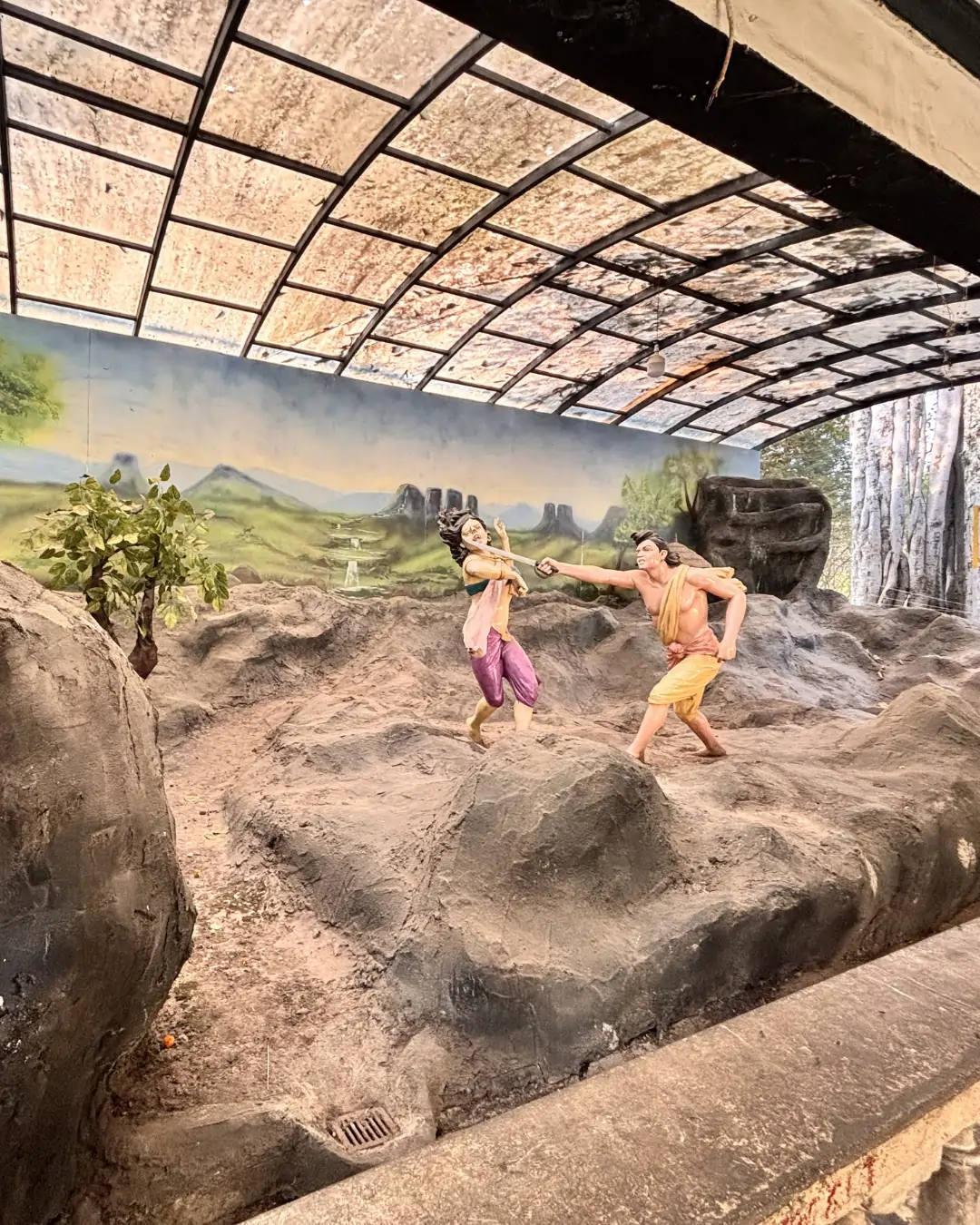
- The Origin of the Name “Nashik” (The Surpanakha Incident) This specific spot in Tapovan is where the most explosive event of the Ramayana happened. When the demoness Surpanakha tried to attack Goddess Sita out of jealousy, Lord Lakshmana acted swiftly to protect her. He did not kill her, but punished her by cutting off her nose. The Sanskrit word for nose is Nasika. Because her nose fell here, the entire region came to be known as Nashik.
- The 12-Year Penance & The Sheshavatar This temple worships Lakshmana in his true cosmic form: the Sheshavatar (the earthly incarnation of Sheshnaag, the multi-hooded cosmic serpent on whom Lord Vishnu sleeps). During the 14-year exile, Lakshmana made a massive sacrifice: he gave up sleep entirely to protect Ram and Sita day and night. The temple marks the peaceful forest area where he did intense meditation (Tapasya) to gain the spiritual power required to eventually kill Ravana’s invincible son, Indrajit.
What You Will See Inside (Architecture & The Ground Reality)
Unlike the massive, crowded Kalaram Temple, this mandir is an intimate and highly peaceful experience. Based on local ground reality, here is exactly what you will see:
- The 14 Steps: To enter the main temple area, you must climb 14 normal-sized steps. It is an easy climb that almost anyone can do.
- The Surpanakha Depiction (Left Side): Just as you enter the temple, on your left side, you will see a detailed depiction/murti showing the exact moment Lakshmana cuts off Surpanakha’s nose.
- The Shiva Linga (Right Side): Right next to the main Garbh Gruha (inner sanctum), you will see a small, beautiful Shiva Linga for worship.
- The Giant Banyan Tree: Inside the temple complex stands a massive, ancient Banyan tree, holding the true energy of the ancient Dandakaranya forest where the divine brothers lived.
The Local Secret: The Hanuman Mystery In almost every Hindu temple, Lord Hanuman is placed facing Lord Rama with his hands folded in prayer. But here, there is a unique sight. Mahaveer Hanuman’s idol is placed directly facing the Lakshmana Garbh Gruha. Furthermore, Hanuman is not in a normal Namaskar (praying) pose; he is standing aggressively holding his Gada (mace). Why? This honors the deepest bond between the two protectors. When Lakshmana was dying on the battlefield, Hanuman flew to the Himalayas and brought the entire Sanjeevani mountain to save his life. Hanuman stands here as the eternal, aggressive protector of the man he saved.
Shree Laxmanji Sheshavatar Mandir: Frequently Asked Questions (FAQs)
The city gets its name directly from the events that happened at this exact temple site. Lord Lakshmana cut off the nose (Nasika in Sanskrit) of the demoness Surpanakha here. Thus, the land became known as Nashik.
Sheshavatar means the earthly incarnation of Sheshnaag, the giant, divine serpent with a thousand hoods from Hindu mythology. Just as Sheshnaag constantly protects and serves Lord Vishnu, Lakshmana was born to constantly protect and serve Lord Rama.
This is a very rare temple layout. Hanuman faces Lakshmana with his Gada (mace) to symbolize his role as Lakshmana’s savior. When Lakshmana was mortally wounded by Indrajit, Hanuman brought the Sanjeevani Booti mountain to save him. Hanuman stands as an eternal, powerful guard for his fellow devotee.
No. If you have your own vehicle on a normal day, you can park right at the gate. You only need to climb about 14 basic steps to enter the serene temple courtyard.
Yes. Tapovan is practically an extension of the Panchavati area. It takes only a 5 to 10-minute drive from the famous Kalaram Mandir and Sita Gufa to reach the Laxmanji Mandir in Tapovan.