
|| ॐ त्र्यम्बकं यजामहे ||
Shree Trimbakeshwar Jyotirlinga
Dakshin Kashi: Where Mother Godavari Bows to Mahadev.
- Temple Timings
- Temple Opening: 5:30 AM
- Morning Puja: 6:00 AM - 7:00 AM
- Mid-day Puja: 12:00 PM - 1:00 PM
- Evening Aarti: 7:00 PM - 8:00 PM
- Temple Closing: 9:00 PM
╰┈➤Timings may vary during special festivals and Kumbh Mela days
- VIP Darshan (Paid Pass)
-
Entry Point
Gate No. 2 (North Entrance)
-
Pass Price
₹200 per person
Note for Pilgrims: Paid Darshan passes are available directly at the temple counters near Gate No. 2 or book an online.
About the Trimbakeshwar Jyotirling Mandir
Trimbakeshwar Jyotirlinga is one of the twelve sacred Jyotirlingas in India.
The Trimbakeshwar Jyotirlinga is Swayambhu (self-manifested); its true origin is so ancient that no one knows its exact age. In 1690, the temple faced brutal destruction under the orders of Mughal Emperor Aurangzeb. However, the original Jyotirlinga was miraculously saved by devoted local priests. To protect the deity, they quickly buried the real Jyotirlinga under sand and mud, placing a fake decoy Linga in the sanctum for the invaders to destroy. The real Jyotirlinga remained untouched. Decades later, the Maratha Empire restored the glory of the site. The magnificent black basalt stone temple you see today was commissioned by Peshwa Balaji Baji Rao (Nanasaheb Peshwa). Its construction began in 1755 and took 31 years to complete in 1786. When you take Darshan today, you are bowing to the exact same eternal, original Jyotirlinga that survived the dark ages.
Why the Kumbh Happens at Trimbakeshwar?
The stones of Trimbak have witnessed a Dharmayudh (Holy War). In 1790, the soil turned red when a fierce battle erupted between the mystic orders over the first Shahi Snan. 12,000 saints sacrificed their lives. To restore peace, the Peshwa rulers declared: ‘Trimbak belongs to the Shaivas.’ Since that day, the fierce Naga Babas and their Akhadas take the holy dip exclusively here at Kushavarta Kund.
Before the chaotic Shahi Juloos (Royal Procession) reaches the water, the Sadhus must bow to the King. Inside the dark, ancient Garbhagriha (Sanctum) lies the rare ‘Tridev Linga’—embodying Brahma, Vishnu, and Mahesh in one. During the Kumbh, the Lord wears his Jeweled Gold Mukut (Crown). Witnessing this ‘Raja Darshan’ is said to grant the same merit as performing a thousand Abhisheks.
Video Credit – Youtube channel @bhavesh_yuj
Trimbakeshwar Vishesh Vidhi
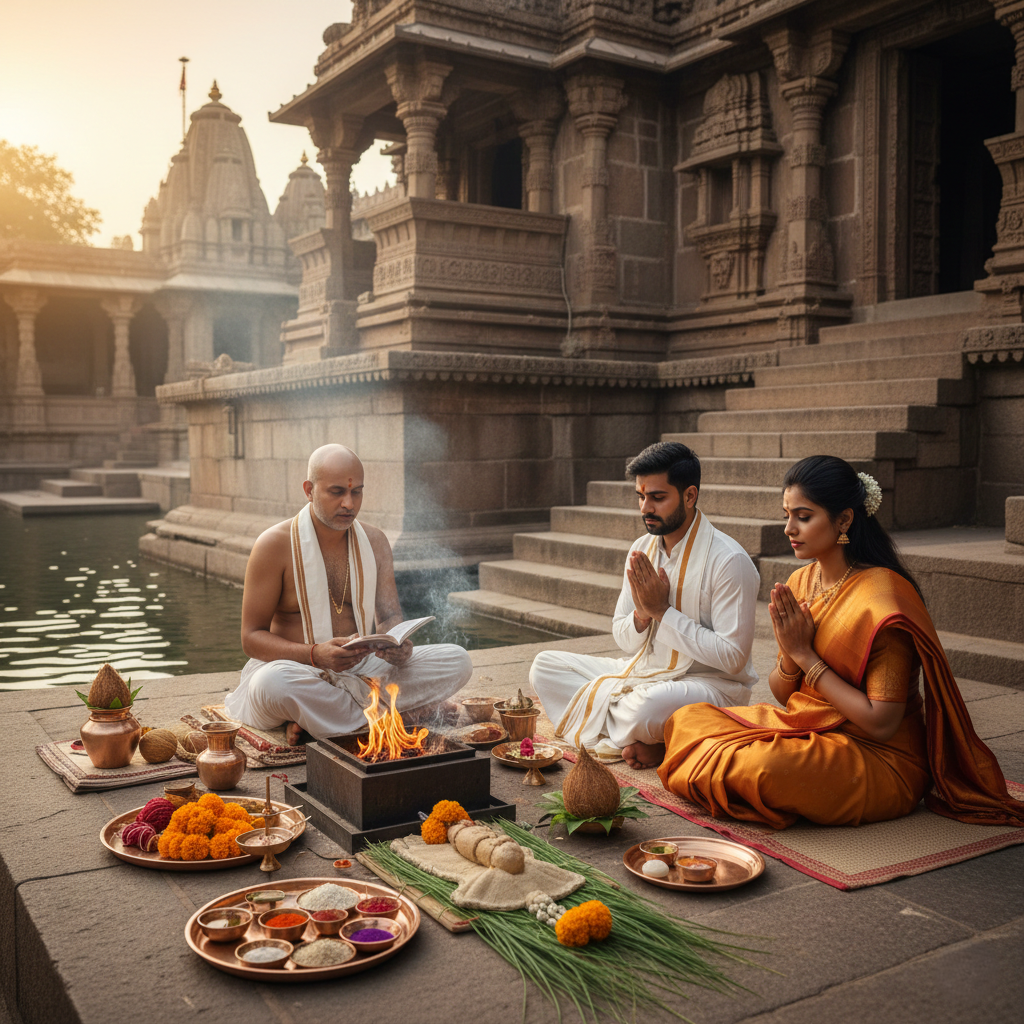
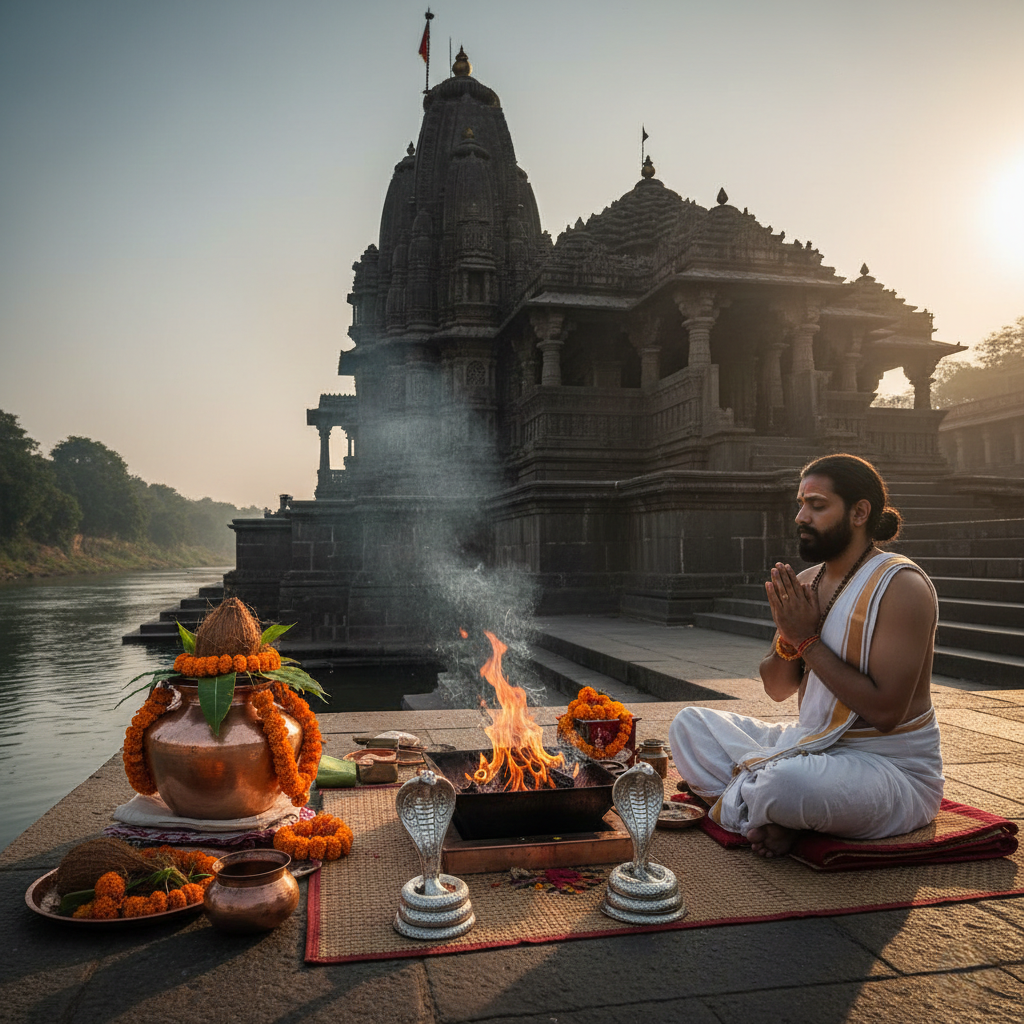
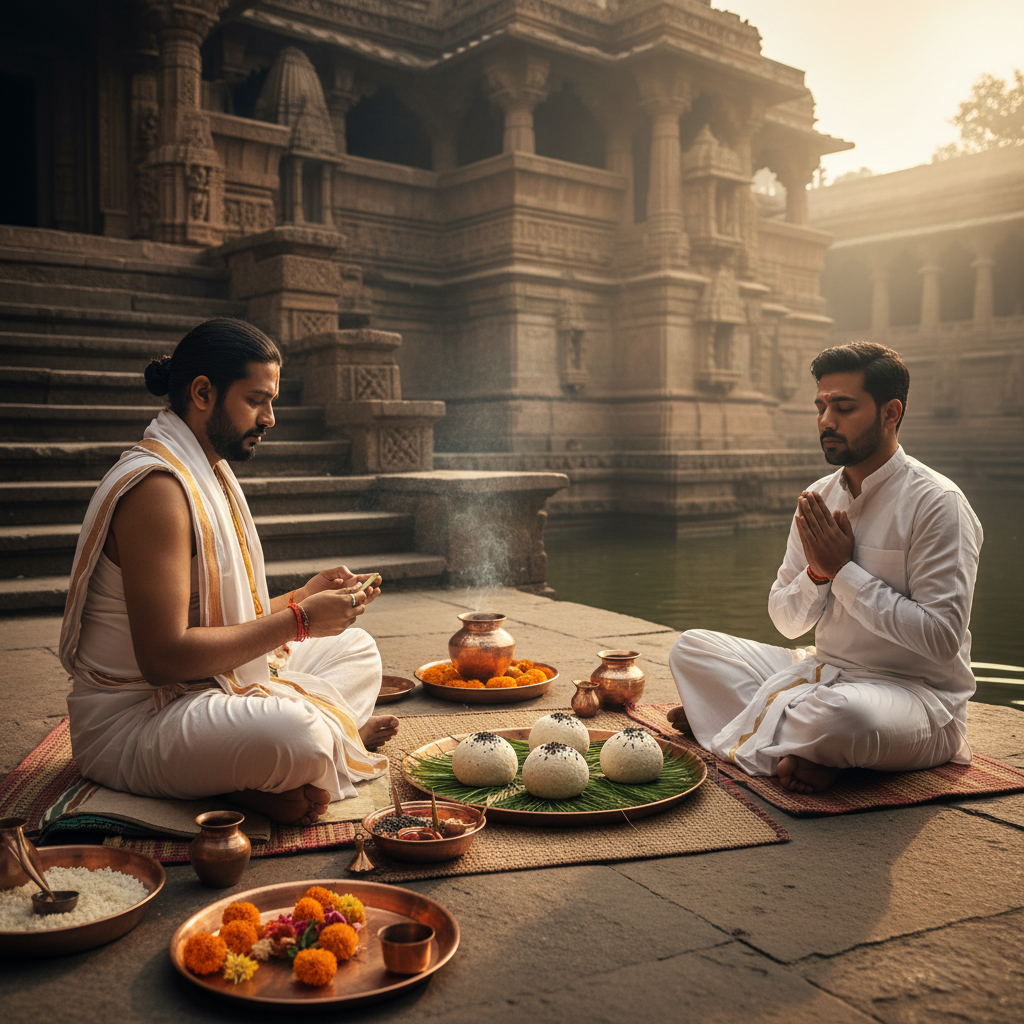
Tirthraj Kushavarta: The Shahi Snan Sthan
For 12 years, the Sadhus wait for this moment. Kushavarta is not just a water tank; it is the specific point where the drop of Amrit (Nectar) fell during the Samudra Manthan.
Legend says the Godavari kept vanishing to test the devotion of Gautam Rishi. He finally trapped her divine flow here using Kusha (Sacred Grass). That is why a dip here is called a ‘Moksha Snan.’
During the Simhastha Kumbh, this Kund becomes the exclusive territory of the Shaiva Akhadas. The fierce Naga Babas lead the Shahi Juloos (Royal Procession) to take the first dip right here, turning the water into liquid divinity.
Gupt Sthan: Hidden Places Beyond the Temple
Your Yatra is incomplete without the Parikrama of these Shakti Sthals.
Brahmagiri Hill is a sacred trekking spot and the origin of River Godavari near Trimbakeshwar.
Neel Parvat is divine goddess worship with panoramic views of Trimbakeshwar hills and valleys.
Sant Nivruttinath Samadhi reflects Nath tradition culture and deep spiritual heritage of Trimbakeshwar.
Ahilya Sangam is a calm river confluence offering spiritual peace and natural beauty in Trimbakeshwar.
108 Shivaling Gufa is a sacred cave housing ancient Shivlings, symbolizing devotion and spirituality.
Gorakhnath Gufa is a historic Nath yogi cave known for meditation, silence, and spiritual energy.
Gangadwar marks the holy origin of River Godavari and is a key ritual bathing place in Trimbakeshwar.
Kolambika Mata Mandir is a revered Shakti temple associated with protection, faith, and local beliefs.
Ancient ashram associated with Sage Gautam, whose penance is linked to the descent of the Godavari River.
Shiva without Shakti is Shav. She is Trimbakeshwar’s Shakti. Your Jyotirlinga darshan remains spiritually incomplete without her blessings.