
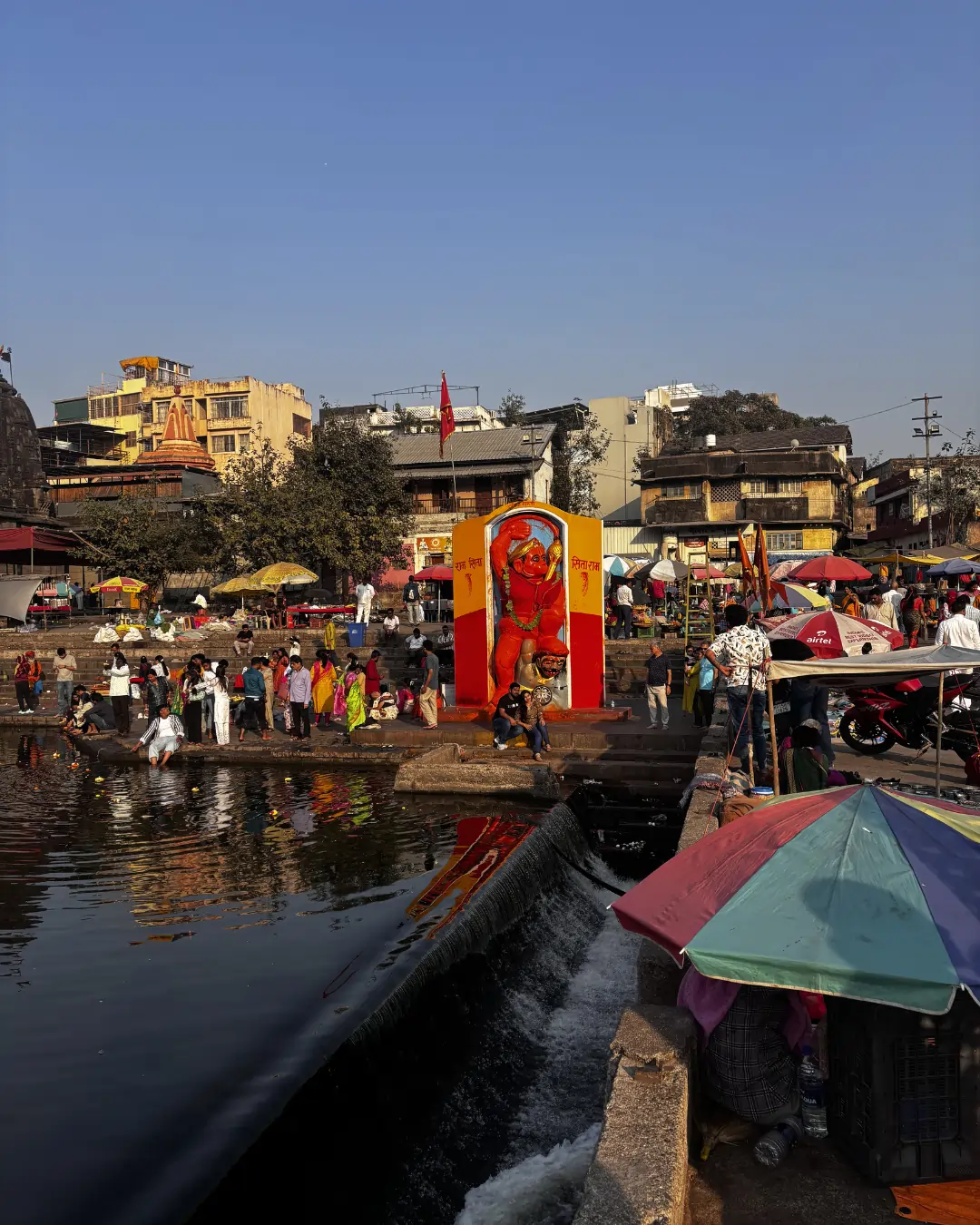
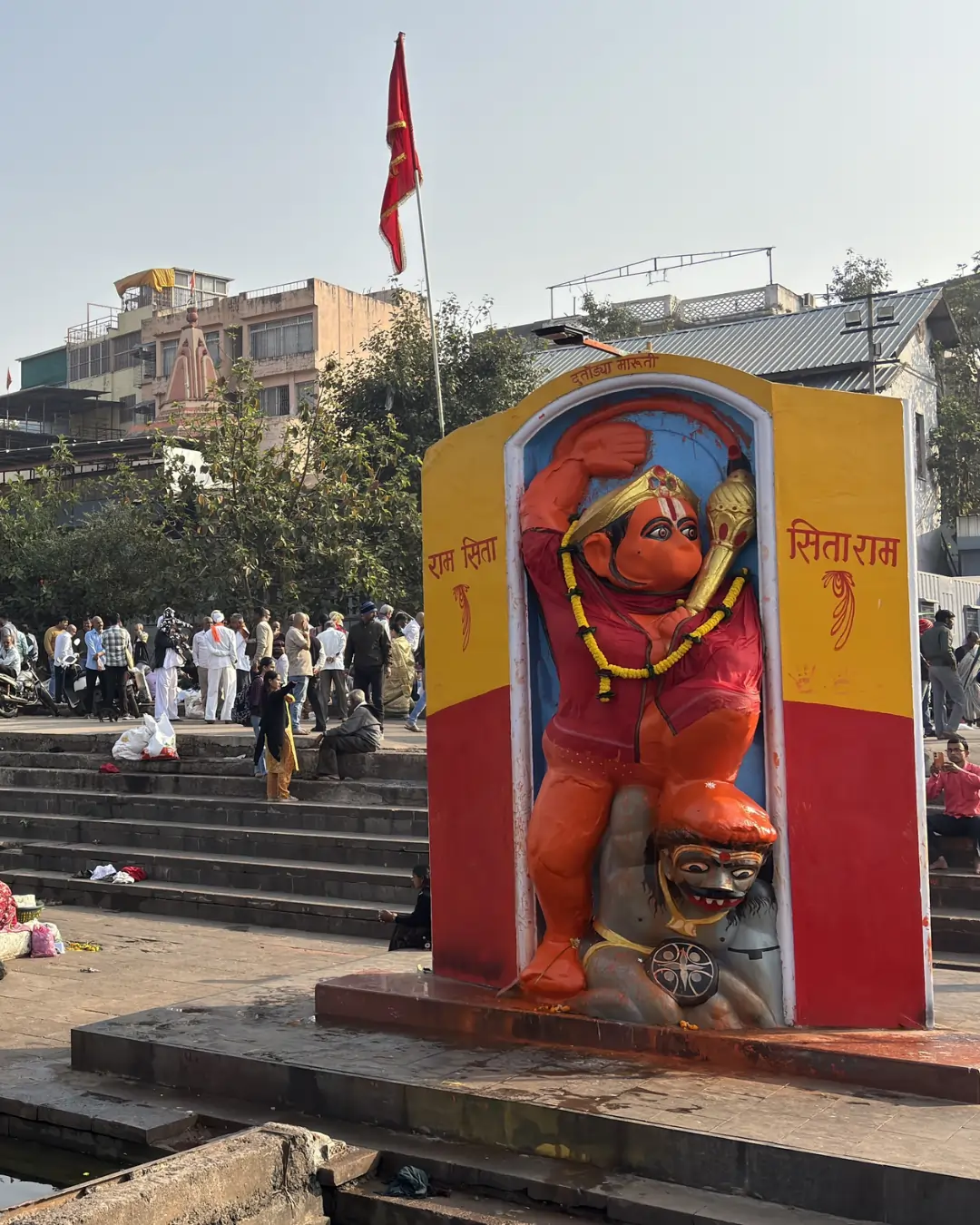
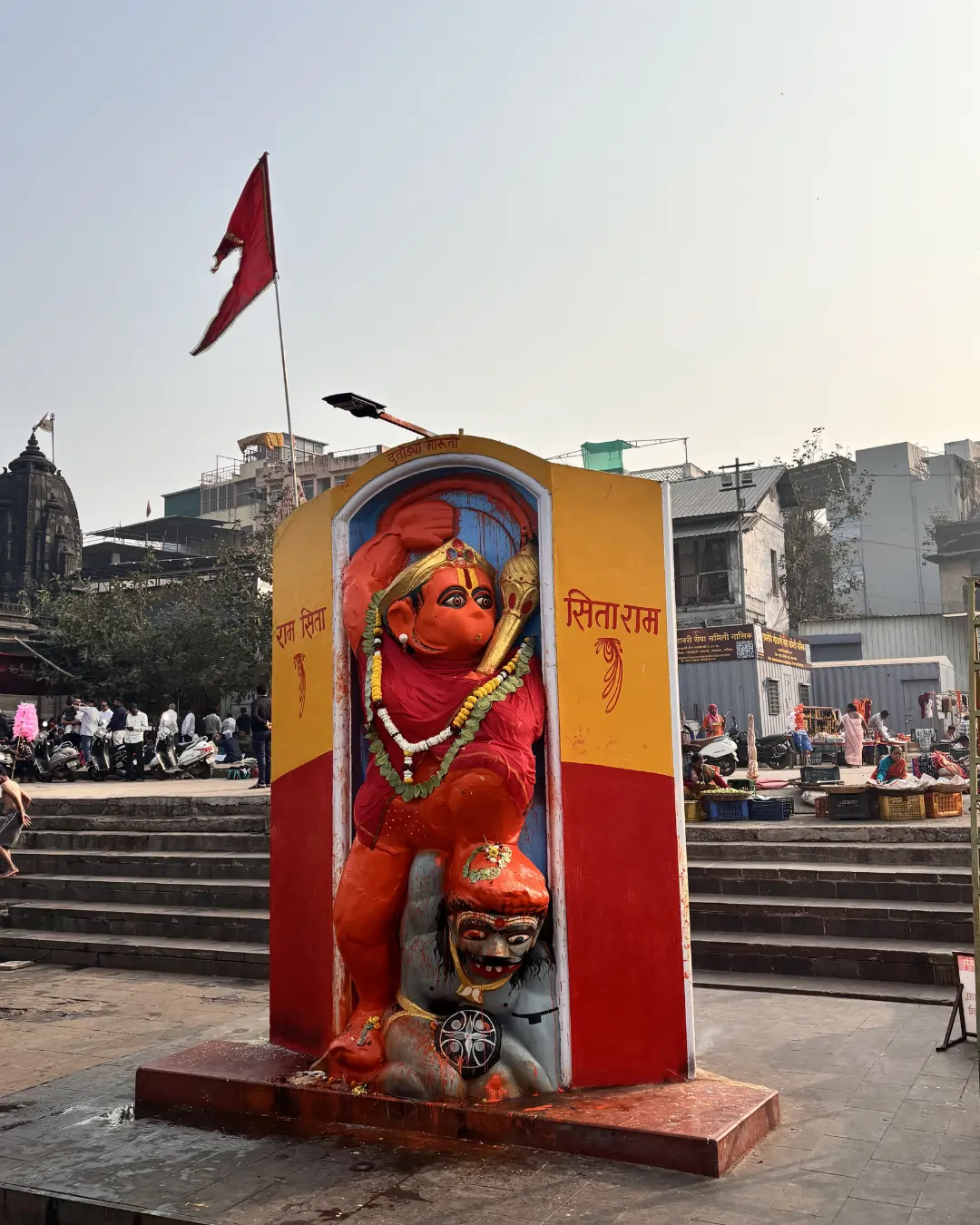
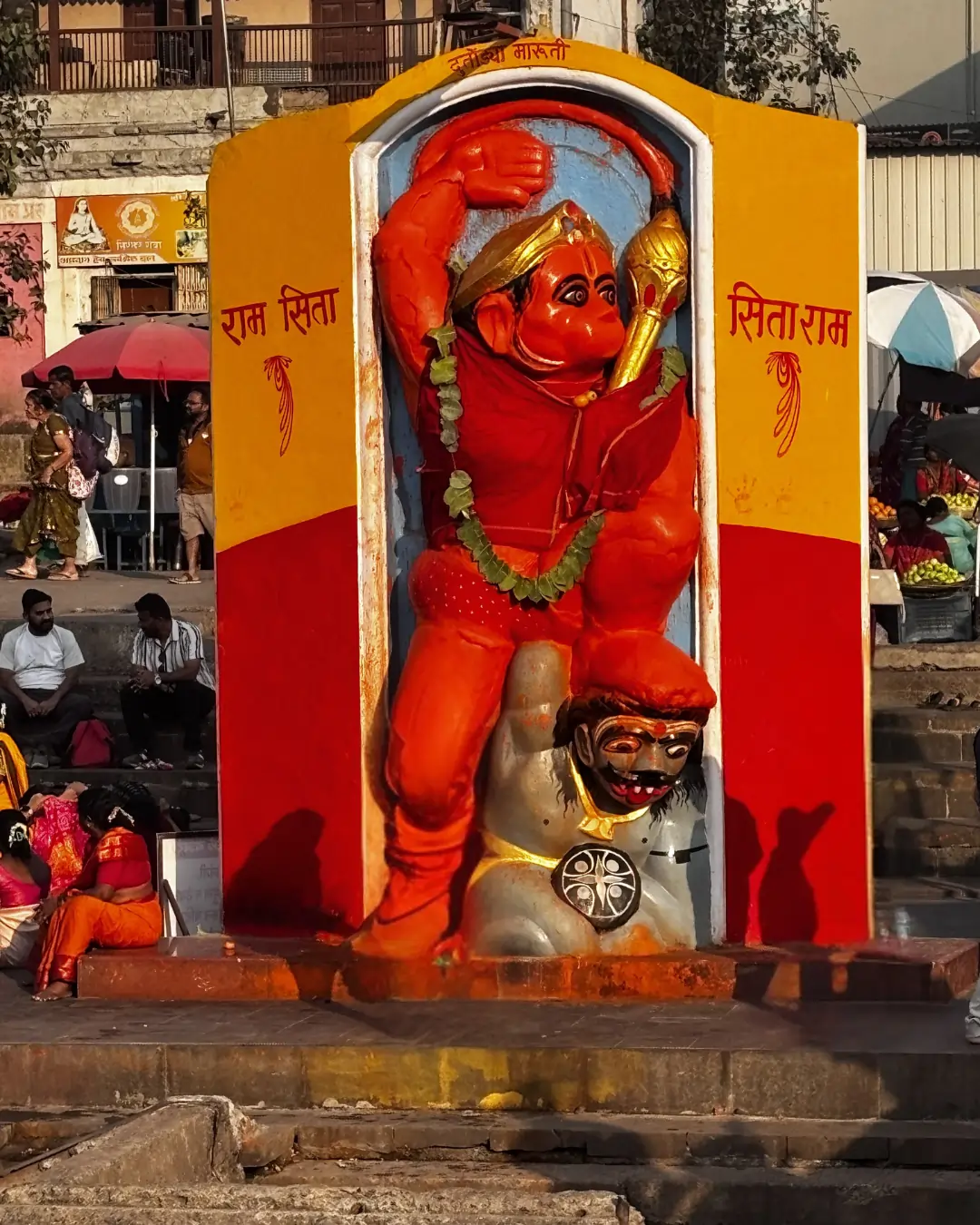
Dutondya Maruti, Nashik
Two Faced Hanuman Temple
Opening Hours
Open 24 Hours.
The temple remains open all day as the idol is situated on the river steps with no doors or closing time.
Best Time to Visit: 6:30 AM to 8:30 AM ( Peaceful Morning Darshan )
Aarti Timings
Morning Aarti Around 7:00 AM (Performed by local priests)
Evening Aarti Around 7:30 PM (Along with Godavari River Aarti)
Location
Right on the Godavari River Ghat,
Near Ramkund, Panchavati.
The Holy Design: The Meaning of the Two Faces - Dutondya Maruti history
In Hindu beliefs, every holy place has a Guardian God (a Kshetrapala). Because Lord Rama lived in Panchavati, Hanuman stayed behind to protect this sacred land forever. This isn’t just a local story; ancient books like the Skanda Purana and Valmiki Ramayana confirm that divine powers strongly guard this area.
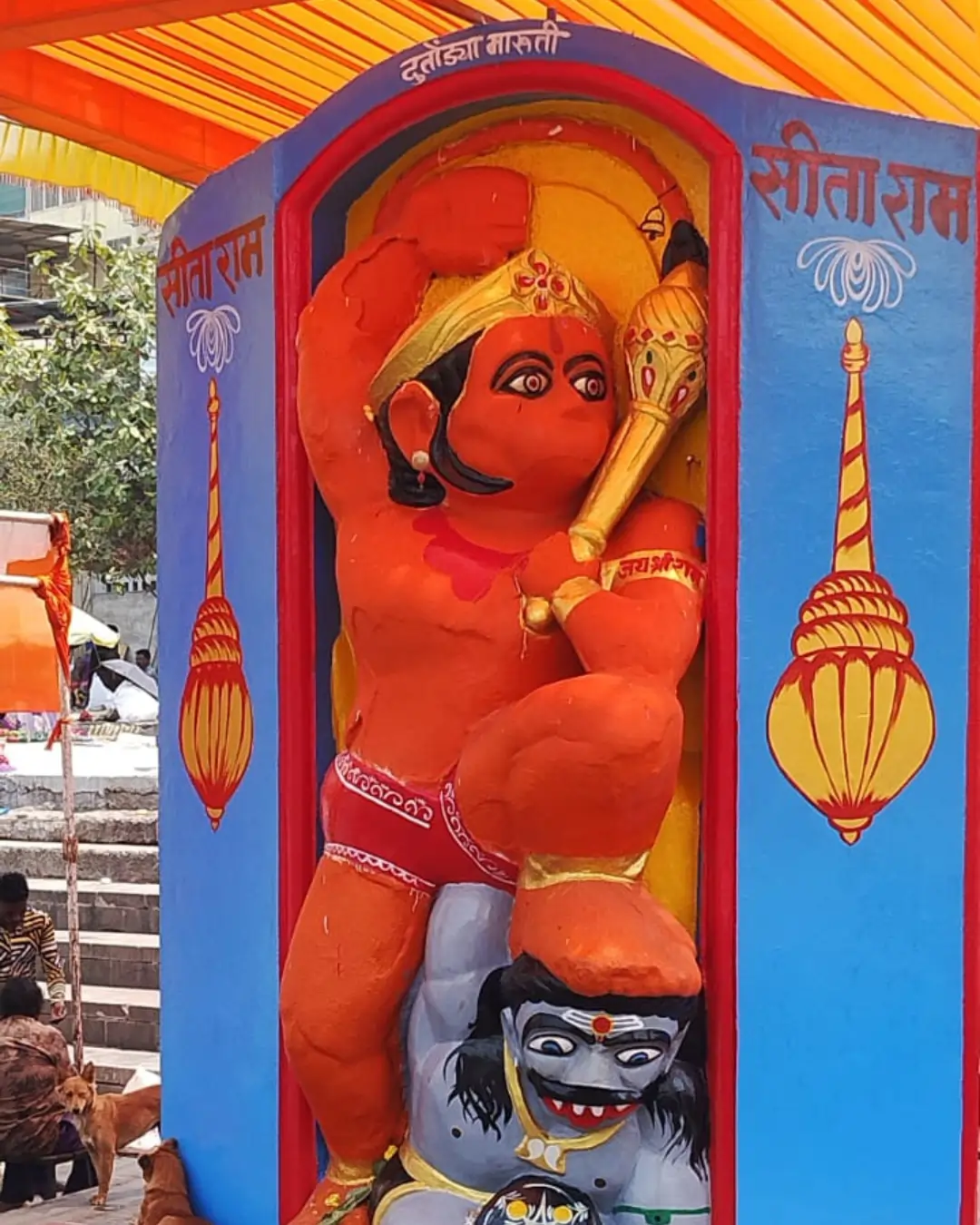
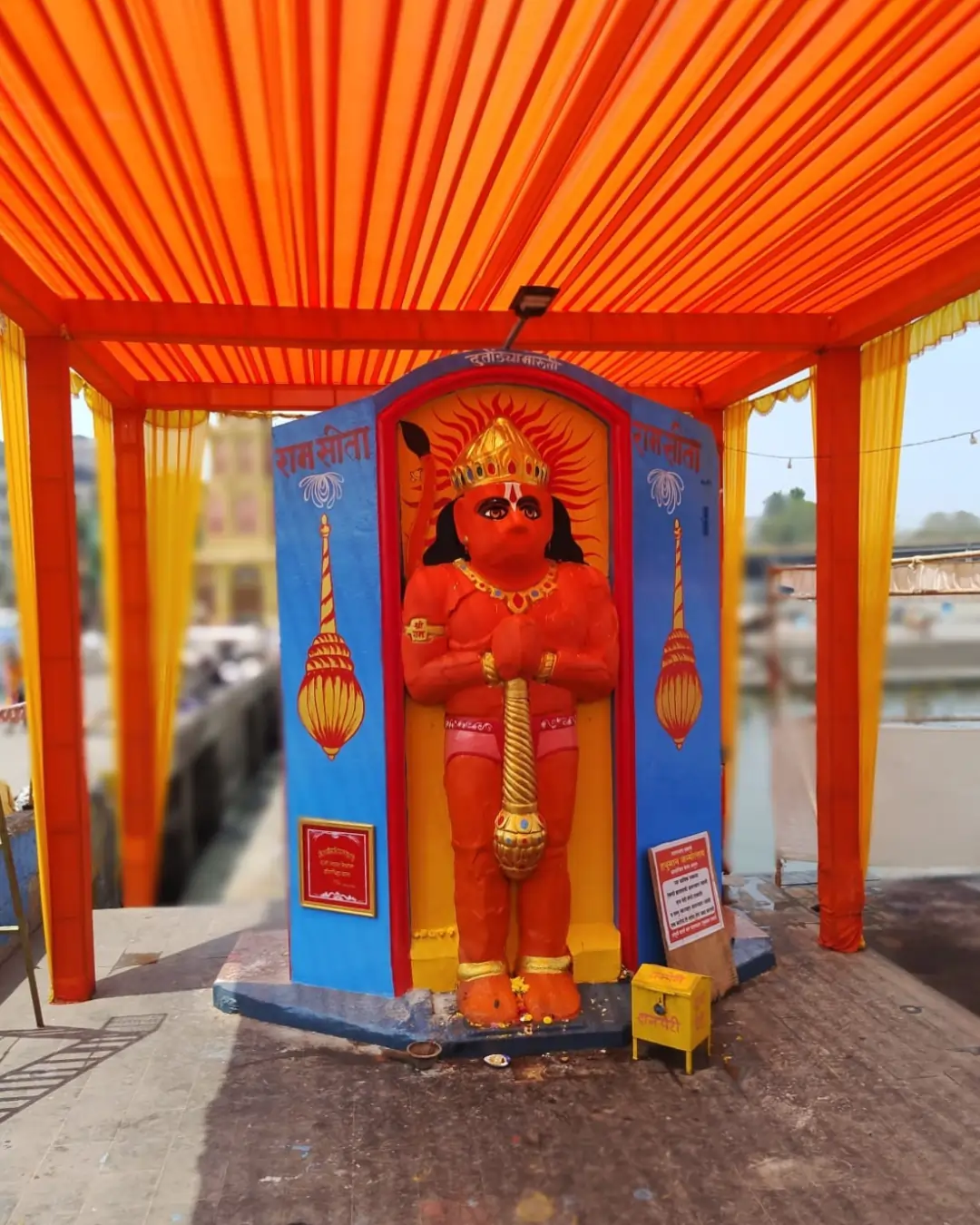
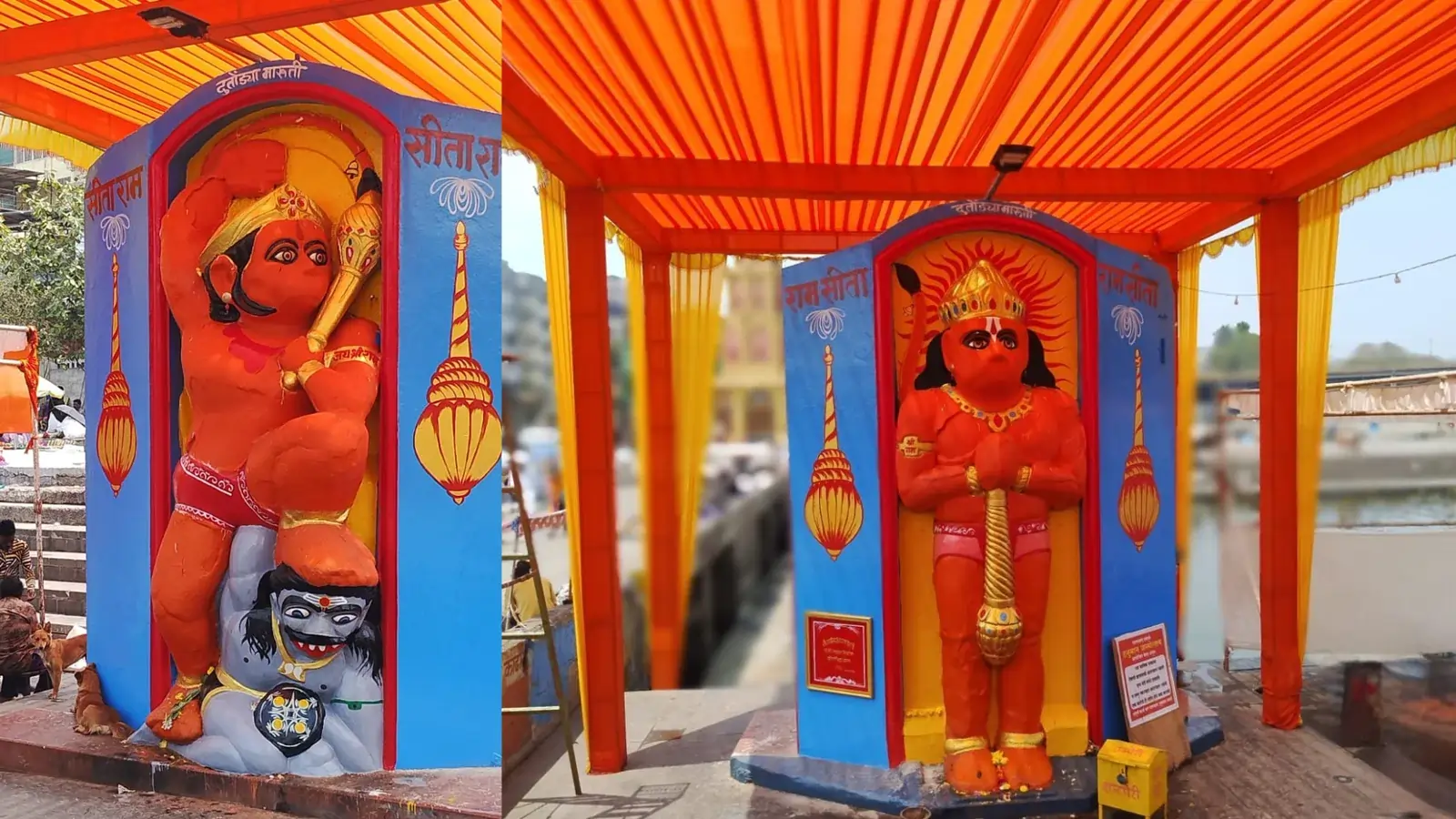
To do this job perfectly, he took a unique form. The word “Dutondya” means “Two-Faced” in Marathi. This huge, open-air stone statue, covered in thick orange Sindoor, stands right on the steps. Its two faces look in opposite directions for two completely different reasons:
Read More
- The Fighting Pose (Facing the River)
- The Posture: One side of the statue looks at the fast water of the Godavari River. This side shows Hanuman in his strong, warrior form, crushing demons and bad forces.
- The Meaning: It acts as a spiritual shield. He stands strong to block bad energy and the dangerous power of the river floods from entering the holy city.
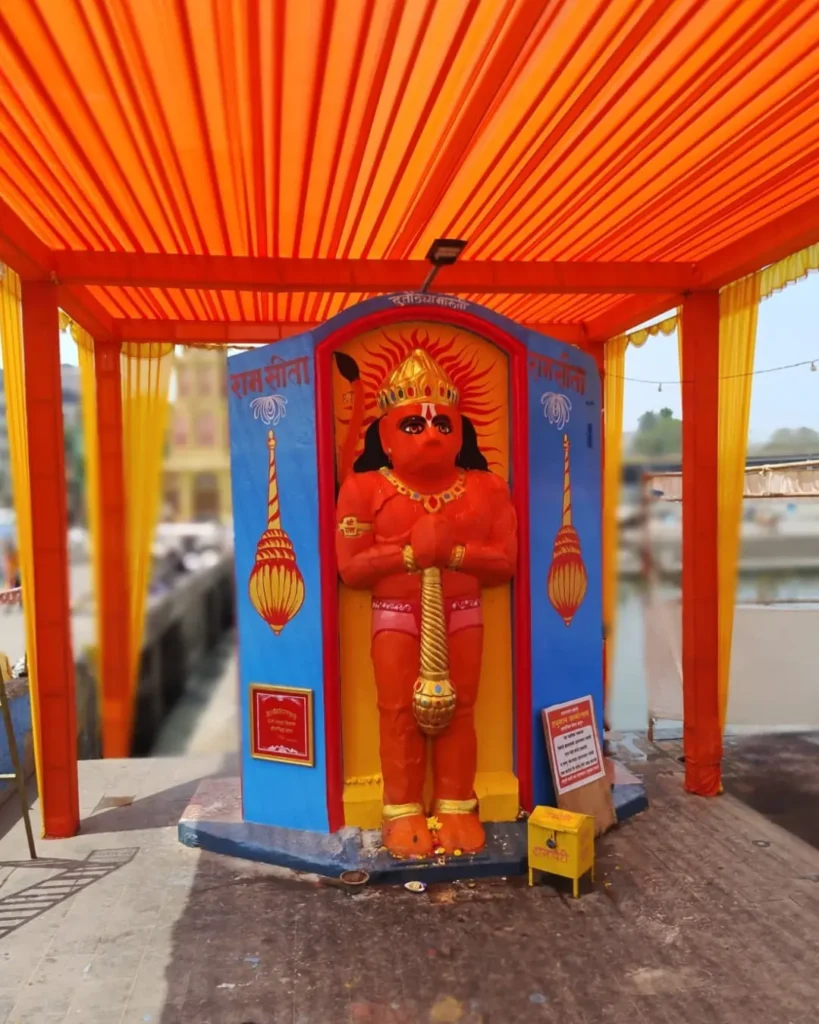
- The Peaceful Pose (Facing the Ghat & Panchavati)
- The Posture: The exact opposite face looks inward toward the steps of the Ghat and the city of Panchavati. This face is calm, with hands folded in a peaceful Namaskar (prayer).
- The Meaning: It shows pure love and respect (Bhakti). While he fights the floods on one side, this face peacefully watches over the devotees standing on the steps and blesses the city where his master, Lord Rama, once lived.
History & Origin: Who Built It?
- The Founder (17th Century): The original statue was set up by the great saint Samarth Ramdas Swami (the guru of Chhatrapati Shivaji Maharaj). During his 12-year stay in Nashik, he placed this idol to build physical strength, courage, and faith among the people.
- The Builders (18th Century): The strong stone platform and the stairs (ghats) where the statue stands were built later during the Maratha Empire by leaders like Sardar Odhekar and Naroshankar.
- Survival: Unlike other temples destroyed by outside attackers, this temple’s only enemy is nature. Because it stands right in the riverbed, it goes completely underwater during heavy rains. The fast water washes away the top layers, but the local priests always repair it and protect the stone with fresh Sindoor. It has never been broken.
The Local Flood Alarm (Ground Reality)
More than just a holy site, this statue is Nashik’s oldest “Water Level Alarm” for the Godavari river. Ask any local Nashikkar, and they will tell you how it works:
- Water at Knees: Normal rainy season flow.
- Water at Chest: Warning level! The lower steps are cleared out.
- Water Over the Head: When the water touches the idol’s head, locals know rain will stop. And 99% of the time, it actually does! But, if the rain keeps falling even after crossing the head, everyone knows a massive flood is coming. This is exactly what happened during the historic floods of 1969, 2008, and 2016.
Visitor Guide & Tips
Essential information for a smooth and respectful visit.
- Photography is allowed and very popular. However, getting a solo picture can be difficult due to crowds. Visit early morning for clear, crowd-free shots.
- Bags and luggage are allowed. Since it is an open ghat, you can carry backpacks and large bags. Do not leave your belongings unattended and keep them with you at all times.
- Footwear must be removed before stepping onto the holy platform near the idol.
By Train
10 km from Nashik Road Station.
Walking
20m walk from Shree Kapaleshwar Mahadev Mandir
Location
Right on the Godavari River Ghat,
Near Ramkund, Panchavati.
Location: Right on the Godavari River Ghat, near Ramkund, Panchavati.
- Open Ghat Parking: On dry, normal days, the area is open, and you can park two-wheelers directly on the upper concrete parts of the Ghat near the temple.
- 4-Wheelers (The SUV Hack):. Look for the Public Pay & Park area below Dahi Pool. It costs roughly ₹30 – ₹50. Park your car there and enjoy a short, beautiful 1-minute walk to reach the Dutondya Maruti.
- Kumbh Mela & Peak Days: 5 days before and after Shahi Snan or big festivals, the entire Ghat area is closed to vehicles. You will need to park outside the city and use government buses.
Dutondya Maruti Temple Festivals 2026
Best time to visit Dutondya Maruti during festivals so According Plan your visit around these auspicious dates in 2026
| Date | Festival |
|---|---|
|
April 02, 2026 |
Hanuman Jayanti |
|
March 26.2026 |
Ram Navami |
|
Every Tuesday and Saturday |
Weekly Peak Days |
|
Next in 2027 |
Shahi Snan (Simhastha Kumbh) |
Latest News & Updates
Frequently Asked Questions(FAQ)
“Dutondya” means “Two-Faced.” The statue has one face looking at the river to fight off bad energy and floods, and another face in peaceful prayer to Lord Rama.
It was set up in the 17th century by Saint Samarth Ramdas Swami to promote physical strength and devotion.
No. To survive the heavy Godavari floods, the huge statue is completely open and stands directly on the stone steps of the riverbank.
Yes People usually offer prayers and flowers. During heavy rains, touching or going near the statue is strictly stopped by police because the water is very dangerous.
Hanuman Jayanti is the most important festival. On this day, the massive two-faced idol is completely recoated with fresh Sindoor (saffron paste), and thousands of Nashikkars gather on the river steps for the evening Maha Aarti.
Tuesdays and Saturdays are the most significant days to visit. According to local tradition, offering prayers and oil to Lord Hanuman on these specific days brings physical strength and protection from negative energy.
Yes. Because Dutondya Maruti is the designated Kshetrapala (Guardian God) of the Ramkund area, it is a strict tradition for pilgrims to take his blessing when they come for their holy dip (Shahi Snan) in the Godavari River.